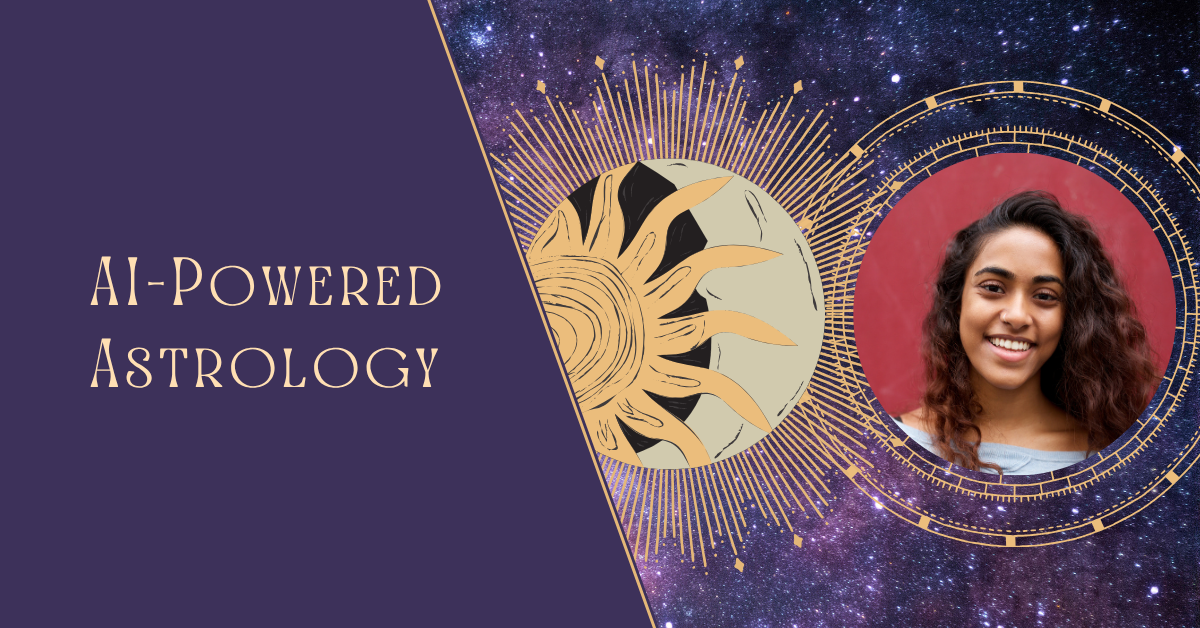

Late at night, under the pale glow of her smartphone, 22-year-old Aditi scrolls through CosmoBot, an AI-driven astrology app that promises to “decode your cosmic algorithm.” One swipe, and it predicts her “next big emotional leap” on Thursday conveniently, the day she plans to quit her job. Coincidence? Maybe. But for millions of Gen Z users worldwide, machine-learning-based astrology feels less like a gimmick and more like guidance.
Across TikTok, Instagram, and Reddit threads, astrology has evolved no longer ancient stargazing but algorithmic soul-searching. Welcome to the digital horoscope era, where neural networks chart destinies and cosmic data collides with code.
Gen Z the cohort born roughly between 1997 and 2012 a generation fluent in both memes and mindfulness. Burned out by pandemic anxiety, job instability, and a culture of constant comparison, many young adults are turning to technology not just for productivity but for purpose.
Traditional astrology never really went away. But the pandemic and the rise of generative AI gave it a makeover. Platforms like Co–Star, The Pattern, Nebula, and now CosmoBot AI combine NASA data, machine learning, and psychological profiling. They claim to generate hyper-personalized horoscopes — not “because Mars is in retrograde,” but because your chat history, sleep cycle, and Spotify playlist suggest you’re emotionally vulnerable this week.
According to a 2025 report by the Economic Times, “AI astrology” searches have risen 340 percent year-on-year, with India, the U.S., and Japan topping the charts. For Gen Z, spirituality is less about religion and more about algorithms that “understand me.”
The Rise of AI-Powered Astrology
In early 2024, CosmoBot AI launched globally. Developed by a Berlin-based startup, it combined astronomical data with natural-language models (similar to ChatGPT) to analyze user emotions. Within months, it went viral on TikTok. Influencers began sharing eerily accurate “AI natal chart readings,” claiming the app “knew their breakup was coming.”
Social media especially platforms where Gen Z thrives. Viral clips showed users crying, laughing, or gasping after receiving “emotional predictions.” One 18-year-old creator in Bangalore posted: “CosmoBot told me to talk to my dad today he ended up having a heart issue. It literally saved him.”
Between late 2023 and mid-2025. As generative AI tools exploded, astrology historically intuitive and human-interpreted became “datafied.” Startups began hiring both coders and mystics. “We wanted to combine ancient cosmic wisdom with data-science precision,” said Elena Voss, CEO of CosmoBot, during a press conference streamed in April 2025.
How does it work?
Using birth details, user behavior, and optional access to social-media sentiment, the AI identifies personality shifts. It cross-references astronomical transits with emotional cues (emoji usage, message tone, and online activity). The result: predictive “astro-emotional insights.” Critics call it “digital psychoanalysis dressed as spirituality.” Users call it “comfort with a dash of magic.”
Reactions & Impacts
In interviews conducted by The Guardian and Vogue India, users describe AI astrology as “therapy without judgment.” One user, Aditi, says, “It feels like someone or something is finally listening without bias.”
Psychologists, however, express concern. Dr. Rhea Srinivasan, a clinical psychologist in Mumbai, notes: “While these tools can offer reflection, they risk emotional dependency. Young people start believing algorithms understand them better than real humans.”
Astrologers, too, are divided. Veteran astrologer Bejan Daruwalla Jr. remarks, “AI can process data, but it can’t sense cosmic energy. It lacks intuition the soul of astrology.” Meanwhile, Tech Crunch Asia hails the trend as “the next frontier in emotional tech,” noting that startups are raising millions in venture capital to build “astrological AI companions.”
The diversity of voices around this phenomenon is striking.
- In Tokyo, Gen Z women see it as empowerment “a blend of mysticism and machine logic.”
- In New York, queer youth communities use AI astrology as self-discovery beyond traditional gendered horoscopes.
- In Nairobi, startup founders integrate Swahili proverbs with star-chart analytics for localized predictions.
Why it matters:
At its heart, AI astrology reflects a cultural shift from faith in the divine to faith in data. It mirrors our growing comfort with machines mediating human emotion. It’s not about believing in fate but about seeking patterns in chaos.
The Bigger Picture Faith, Technology, and Capital
Beneath the glitter of zodiac emojis lies a booming business. The global “spiritual tech” industry, valued at $8 billion in 2024, is projected to hit $13 billion by 2027. Venture capital firms are backing these apps aggressively, seeing in Gen Z’s existential curiosity a monetizable trend.
Sociologists describe it as “algorithmic religion” a personalized, data-driven belief system replacing organized worship. Unlike churches or temples, these apps offer cosmic connection without commitment. You can unsubscribe from your “destiny” anytime.
However, the backlash is rising. Privacy advocates warn that sharing birth data, mood logs, and personal chats gives tech companies intimate behavioral insights. “You’re not just revealing your zodiac sign you’re revealing your psyche,” says digital-ethics researcher Dr. Manuel Ortiz. Some governments, like the EU, are already reviewing “spiritual data usage” under digital-consent laws.
AI may be mapping the stars, but humans still look up seeking meaning. For Gen Z, AI-powered astrology isn’t a rejection of science or faith it’s a fusion of both. A mirror reflecting their digital souls, coded in constellations.
As Aditi shuts her phone and stares at the night sky, she whispers, half to herself, half to her algorithm: “Maybe destiny’s just data waiting to be understood.”
And somewhere, deep in a server farm, an AI recalculates her next prediction proof that in 2025, the line between cosmic wonder and code has never been thinner.